
Find People Through Spanish Fork Records
A sound search starts with the fact already known. A full or partial name fits the Utah County owner roll, recorded document index, court party search, cemetery database, professional license list, and business registry. An old street address works better in the county address form and parcel map. A date of death can lead to the cemetery, obituary sources, probate case, and archival vital record.
Spanish Fork is not the Utah County seat. Many lasting records for city residents are held about ten miles north in Provo, while city files stay with Spanish Fork departments. That split explains why one name may appear in a county deed, a state court summary, and a local cemetery entry. Compare dates, middle names, parcel numbers, and related people before treating two results as one person.
- Search Utah County Land Records by owner name or address. Save the parcel serial and each ownership period.
- Use Xchange for public court summaries. Select justice, district, or both courts as the facts require.
- Follow death and family links through the city cemetery, probate files, newspapers, and Utah Archives.
- Check an official license, business, or staff directory when a role or trade is known.
- Ask the office that keeps the file when an online index ends. A written GRAMA request can reach city or state records not posted online.
Spanish Fork People Search Offices
The keeper depends on the record. The Utah County Recorder holds deeds, liens, plats, abstracts, and recorded images. The County Clerk handles marriage licenses and election administration. Spanish Fork City Administration keeps council, contract, planning, license, deed, and easement files, while Police uses a separate records form. Detailed disclosure rules and copy procedures belong with the Spanish Fork public records system.
Utah County Recorder
100 East Center Street, Suite 1300
Provo, UT 84606
801-851-8179
Utah County Clerk
111 South University Avenue
Provo, UT 84601
801-851-8109
Spanish Fork City Records
40 South Main Street
Spanish Fork, UT 84660
801-804-4500
Search Spanish Fork Land Records
Utah County gives a Spanish Fork searcher more than one land index. Its free menu separates owner name, street address, parcel serial, subdivision, delinquent tax, document party, kind of instrument, recording entry, document image, cross-reference, and parcel map tools. Appraisal, values, tax history, abstract books, plats, mining files, and water-right documents add other routes. The current index is useful, but older material may sit in a scanned book rather than a uniform database row.
The Utah County Land Records menu shows the full set of search choices.
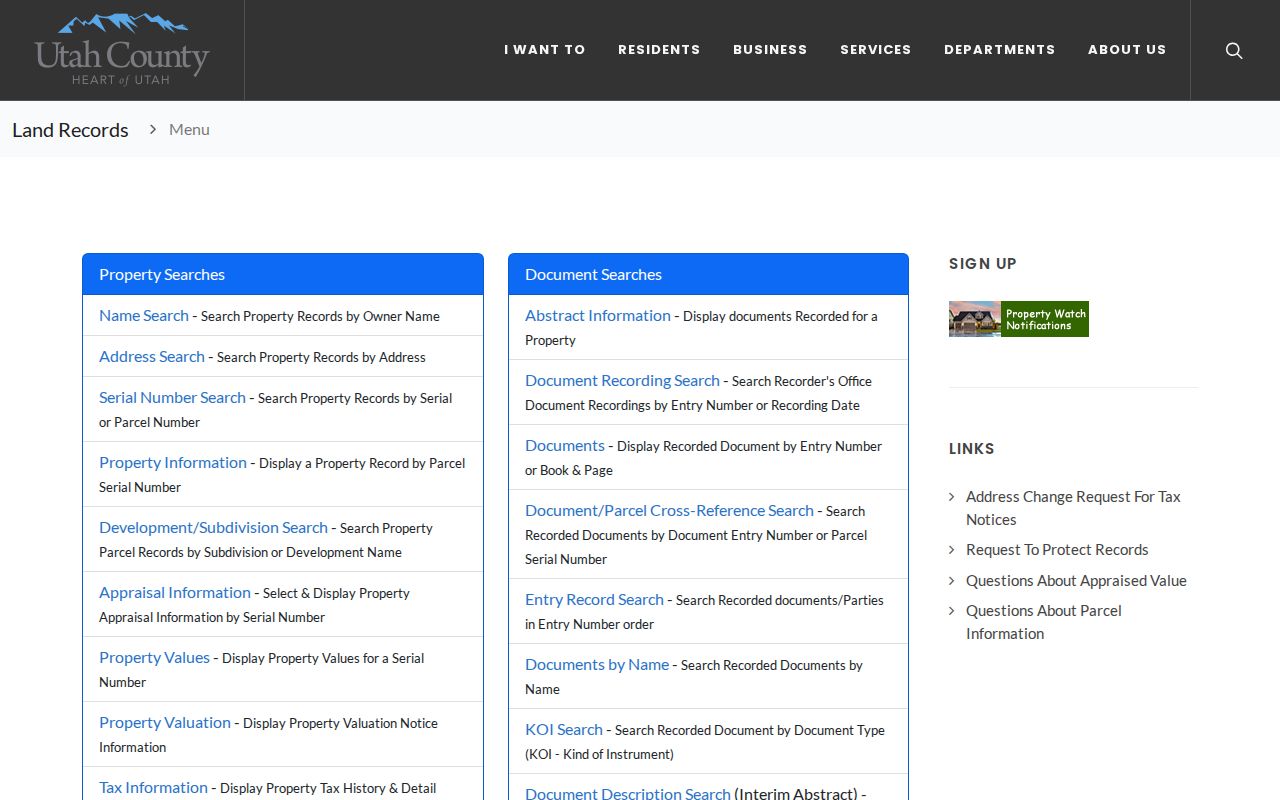
The many entry points make the portal useful when a surname is common or the only reliable fact is a parcel, subdivision, or recording number.
| Search route | Input | Useful result |
|---|---|---|
| Owner Name | Name and record scope | Owner, serial, tax area, validity years, situs |
| Address | Number, direction, street, type, city | Parcel tied to a physical address |
| Documents by Name | Recorded party and filters | Instrument, recording entry, image route |
| Serial Number | Compact or punctuated parcel serial | Parcel card, tax, abstract, and map links |
Turn a Spanish Fork Name Into Property
The owner form accepts a surname alone or the format LAST, FIRST MIDDLE. Choose all records to see prior ownership periods, current records for the present roll, or never-valid entries for old parcel states. Results show the indexed owner, clickable serial number, tax area, years valid, and property address. An absent street address does not end the trail. Open the serial, abstract, and recorded documents instead.
The official owner-name form is the direct route from a person to a parcel.
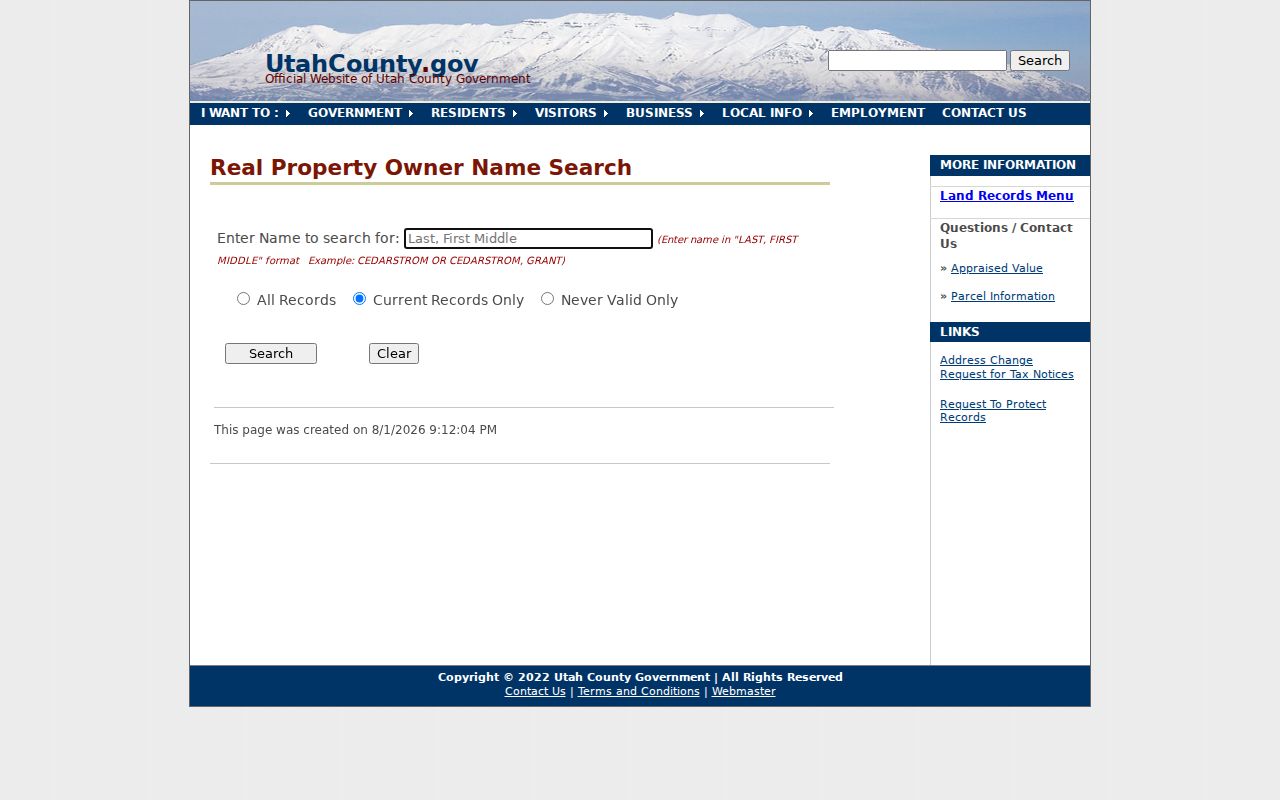
Keep mailing and situs addresses separate. Situs means the parcel's physical place. The mailing address is where tax notices go and may point to an owner who lives elsewhere. The deed and abstract, not the assessment roll alone, establish the recorded title trail.
Check Spanish Fork Record Geography
A postal address labeled Spanish Fork may lie beyond the city boundary. The library specifically warns that Benjamin, Lakeshore, and other county residents can receive Spanish Fork mailing addresses without living inside the municipality. That difference can change the right city custodian, voter precinct, permit office, library eligibility, and service provider.
The county address form mirrors the local grid by separating number, direction, street, street type, and city or location. If an address has changed or a parcel was split, use its serial and legal description. The Utah County Parcel Map offers address, serial, owner, city, and public-land-survey searches.
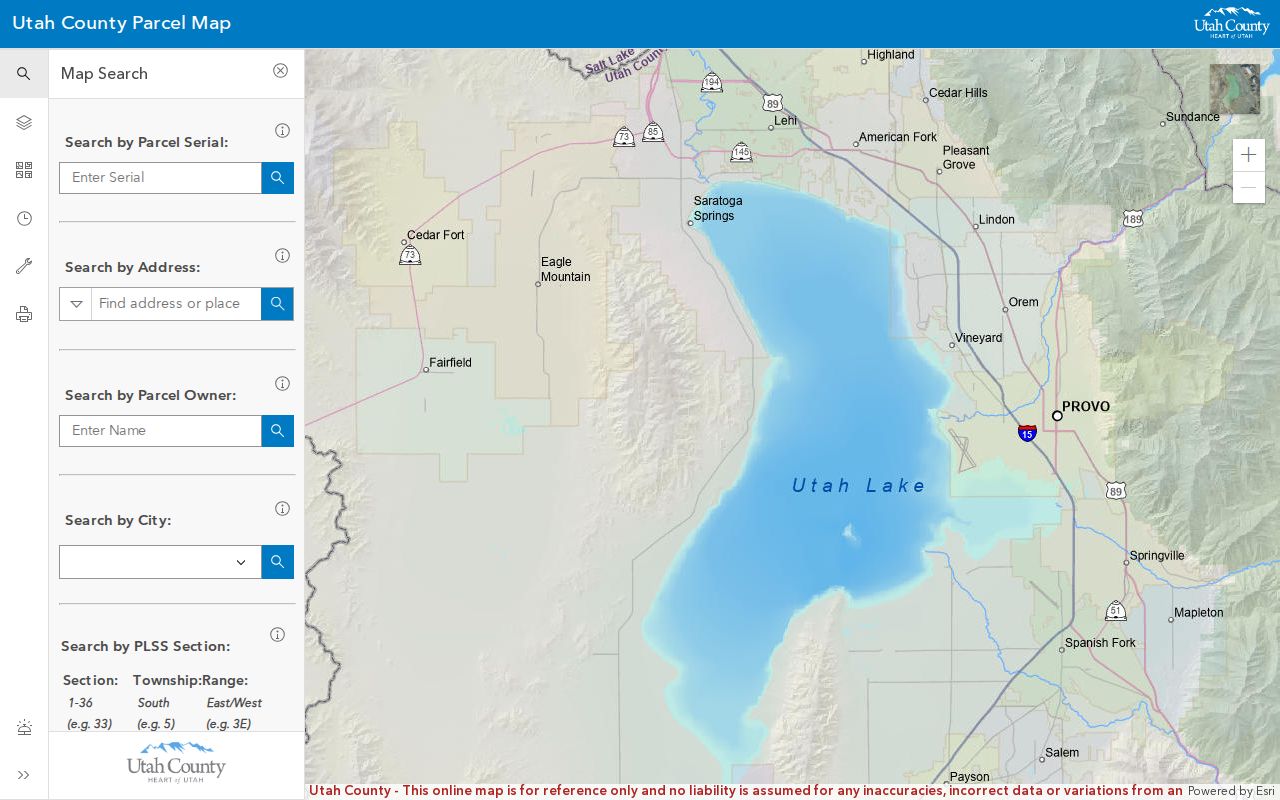
A historic-map date in this viewer is a system-entry date, not the deed recording date. Use the recorder entry when timing a transfer matters.
Note: City growth and annexation layers show planning geography, while the current boundary answers whether a parcel is actually within Spanish Fork.
Search Spanish Fork Court Records
Court level matters. Spanish Fork Justice Court handles city ordinances, traffic matters, infractions, small claims, and most class B and C misdemeanors. Fourth District Court handles civil and domestic cases, probate, felonies, and class A misdemeanors. Federal matters use PACER instead of Utah's system. Search both Utah court levels when the case type is uncertain.
The Utah Courts Xchange access page explains the public name search and terminal fallback.
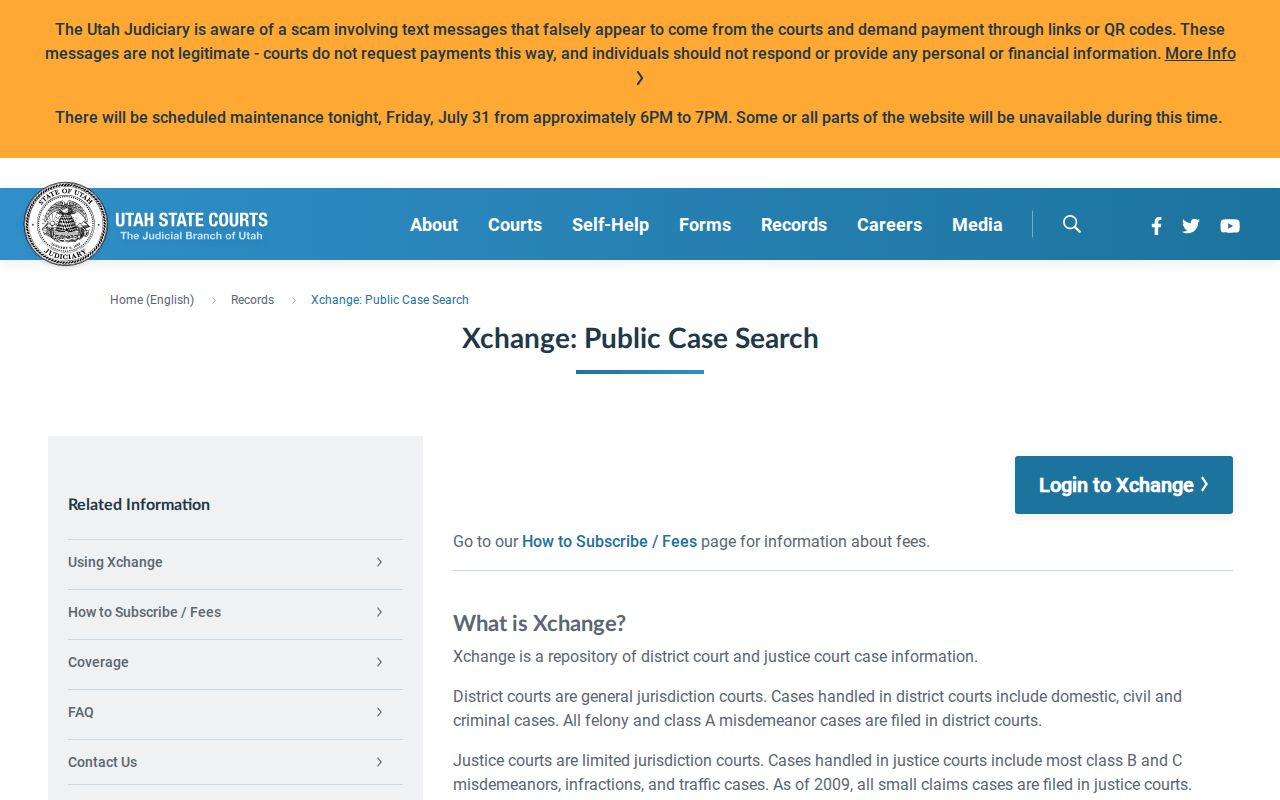
Xchange can return county, court, case type, number, filing date, party name, and date of birth when available. A longer history may show the judge, attorneys, filings, hearings, outcome, charges, or judgments. Online access is paid. Most district courthouse terminals and the Utah State Law Library provide free CORIS access, and the clerk supplies actual pleadings or certified copies.
| Court source | Spanish Fork matters | File route |
|---|---|---|
| Justice Court | Ordinance, traffic, small claims, lower misdemeanors | Xchange summary, then local clerk |
| Fourth District | Civil, probate, divorce, felony | Xchange, courthouse terminal, district clerk |
| Utah Archives | Transferred court files older than fifty years | Catalog, appointment, or reference request |
| Federal court | District of Utah cases | PACER or federal clerk |
Sealed, expunged, juvenile, adoption, child-welfare, and other private material will not appear as an ordinary public case file.
Trace Spanish Fork Vital Records
Birth, death, marriage, and divorce records do not all come from one counter. Utah County Health Department and the state Office of Vital Records issue qualifying certificates. The Utah County Clerk keeps marriage-license records. A divorce decree belongs to Fourth District Court, while a divorce certificate is a short vital-record abstract of the event.
Current certified records require a direct, tangible, and legitimate interest under Utah Code §26B-8-125, with identification and proof of relationship or legal authority as needed. Birth records become archival after 100 years and death records after 50 years. Marriage and divorce certificates have a 75-year protected period. Family historians can often use an archival image, cemetery record, newspaper, or court file without ordering a current certificate.
- Certified copy
- An official copy authenticated by the legal custodian.
- Index
- A finding list that points to a record but may not show the whole document.
- Decree
- A court's final order, distinct from the state's event certificate.
- Decedent
- The person who died and is named in a death, cemetery, or probate record.
Find Spanish Fork Cemetery Families
The Spanish Fork Cemetery is a rare city-level people index. Burial began in 1853, formal establishment followed in 1868, and the city reports more than 12,000 headstones across 32 acres. Its database can connect a decedent with a grave location and headstone photograph. Search fields can also reach mother, father, and plot owner information, which makes the map valuable for family groups.
The city provides the cemetery search and map gateway.
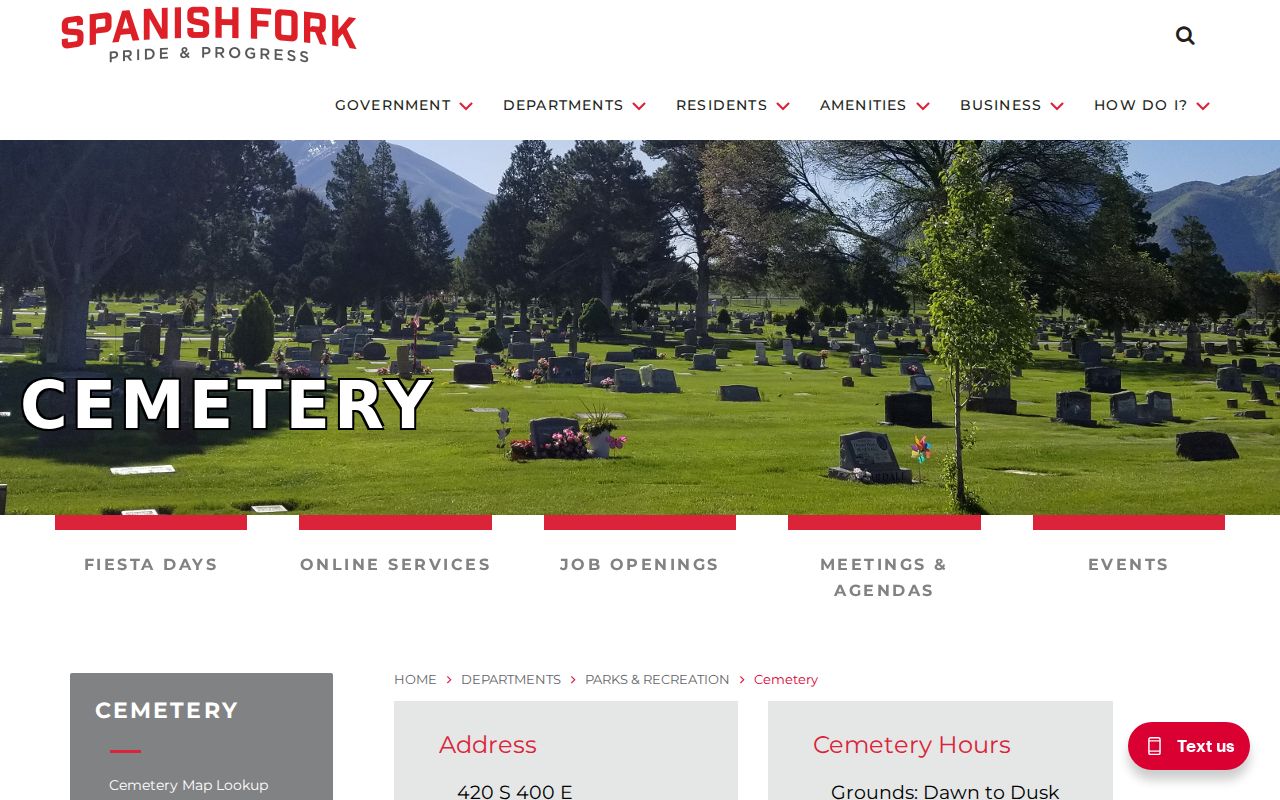
Not every entry is complete. Cemetery staff accepts corrections and added biographical facts, so a nickname, married surname, or missing date should be checked against probate, obituaries, vital records, and the monument itself.
Verify Spanish Fork Professional Names
A role can be as useful as an address. Utah's Division of Professional Licensing searches a person by name and profession or by license number with its four-digit identifier. Results can show license type, number, status, issue and expiration dates, and a discipline link. An old or superseded license may reflect advancement to another credential, so inspect all entries for the same person.
The DOPL Licensee Lookup is the official verification source.
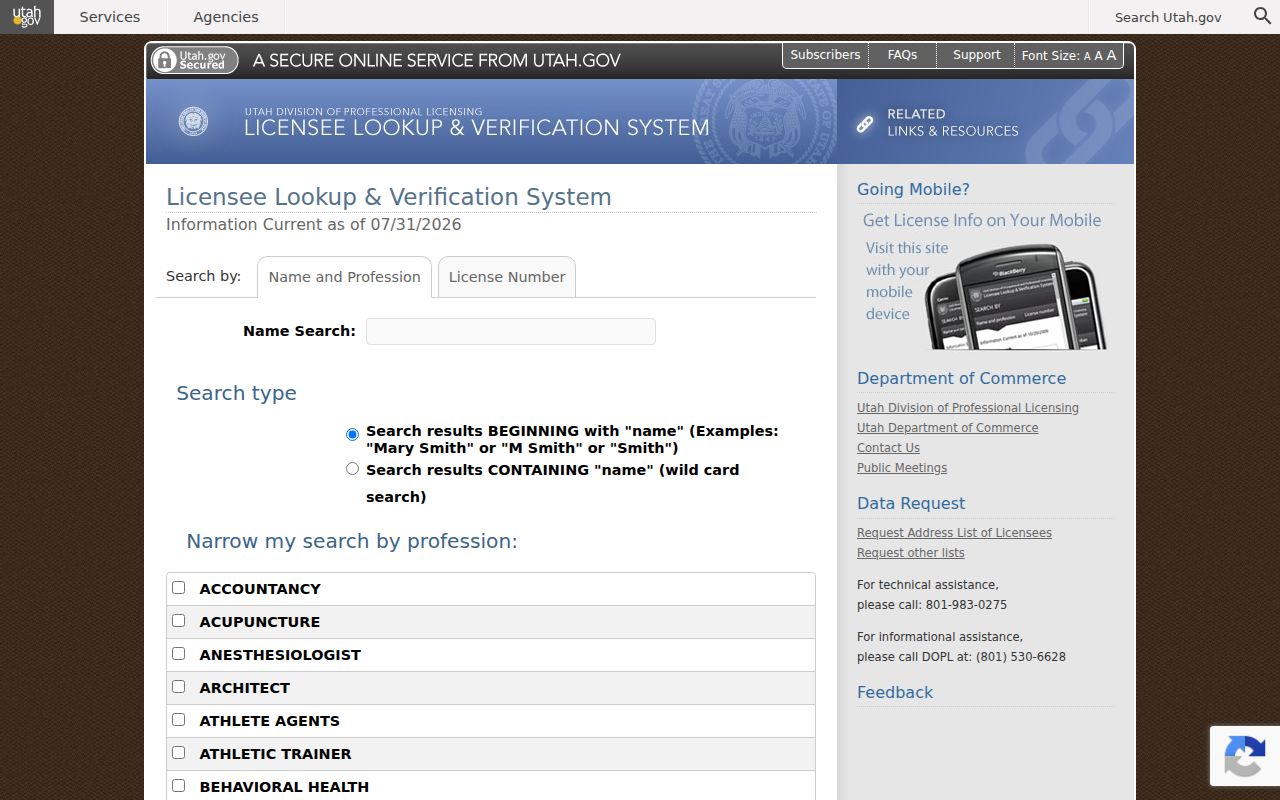
Other official directories cover educators, lawyers, notaries, and real estate credentials. They establish a public role or license status, not a complete life history.
Connect Spanish Fork Business Principals
Utah corporate records are maintained by the Division of Corporations and Commercial Code. A business name or entity number can lead to status, filing history, registered agent, principals, and business addresses. Search a trade name as well as a person's name when a deed, lawsuit, or sign uses a company. UCC records use a debtor name or filing number and form a separate financing-statement index.
The official Utah business name search provides the basic entity route.
Plain filings and certified copies may carry fees. Basic search results are best used to identify the correct entity and filing before ordering a document.
Browse Historic Spanish Fork Records
Spanish Fork's record trail reaches back to the early city. Council records begin in 1855, cemetery burials in 1853, and justice-court dockets in 1866. County recorder records begin in 1870. Handwritten alphabetic land indexes continue through January 1978, when the computer index takes over, while handwritten and computerized abstracts overlap for several years.
Utah Archives preserves city deeds, easements, planning files, real-property files, official oaths, police reports, cemetery financial files, ordinances, and court dockets. One especially useful source is the 1890 Spanish Fork precinct voter register, an alphabetic book compiled by J. S. Thomas and later transferred to the Archives. It functions as a historical resident directory, unlike today's identity-gated self-lookup.
The Utah Archives research gateway opens catalogs, finding aids, digital material, and reference service.
Archives reference work may take weeks, so provide names, dates, agency series, and record type. Recorder abstract books and the Spanish Fork block books remain a separate path for land-linked ancestors.
Request Spanish Fork Records Offline
Online tools are indexes, not the whole public file. Utah's Government Records Access and Management Act, known as GRAMA, lets any person ask the governmental entity that retains a record. A useful request names the requester, gives contact information, and describes the file with reasonable detail. Include a date range, address, case number, parcel serial, department, or named parties when known.
An agency generally responds within five business days for a proven public-benefit request and ten business days otherwise. Extraordinary circumstances can extend that time, but the agency must explain why and state when records should be available. Fees may cover actual duplication and necessary staff work. The agency cannot charge merely for reviewing a file to decide whether disclosure applies.
Spanish Fork Police uses a separate form for reports. Active investigations are unavailable through that route, and access to completed reports can depend on whether the requester is a subject, guardian, or authorized person. The city accepts the police request by fax, mail, or in person. County land records and court files have their own counter and clerk channels.
Use Spanish Fork Records Lawfully
Public access does not make every use fair or legal. Utah stalking law includes repeated monitoring, surveillance, communication, and obtaining or spreading information when the conduct causes reasonable fear or emotional distress. Protected voter addresses, private vital records, sealed cases, and confidential government data remain outside an ordinary name search.
Lawful personal use. Use Spanish Fork records for genealogy, reconnecting, estate research, civic oversight, fraud checks, or personal safety. Never use them to stalk, harass, threaten, or defeat an address-protection program.
Official sources usually explain who holds the record and how current it is. Commercial search products can merge broad datasets, but they may carry stale addresses, combine two people, or omit the source. Confirm a key fact with the custodian before acting on it.
| Source type | Strength | Limit |
|---|---|---|
| Official index | Named keeper and defined fields | May be a summary rather than the document |
| Certified record | Authenticated by the custodian | Eligibility, request, and fee rules may apply |
| Commercial compilation | Broad name, phone, and address matching | Source and freshness may be unclear |
Check Spanish Fork Voter Records
Utah's voter lookup verifies a person's own status through first name, last name, and date of birth. It is not a public resident browser. The public voter file is a different product with public fields such as name, age range, address unless protected, districts, affiliation, status, last update, and election participation. It never shows a ballot choice.
Exact birth date, identification numbers, email, phone, signatures, and protected records remain private. Utah County Elections handles a county subset, while the Lieutenant Governor sells only the statewide file. The full lookup, privacy split, historical voter book, and request choices are covered in Spanish Fork voter registration records.
Monitor Spanish Fork Property Records
Utah County Recorder's free Property Watch sends an email when a deed, lien, or other document is recorded against a selected property. That alert can help an owner notice activity and locate the new entry quickly. The contact information is used for the alert service and is not distributed.
Property Watch does not prevent fraud, prove ownership, or replace review of the recorded instrument. A surprising alert should be checked against the entry, image, parcel abstract, and Recorder staff. The deed remains the title evidence, while a parcel card can lag a recent recording.
Note: Spanish Fork property records can identify an owner, but they do not prove that the owner occupies the situs address.